
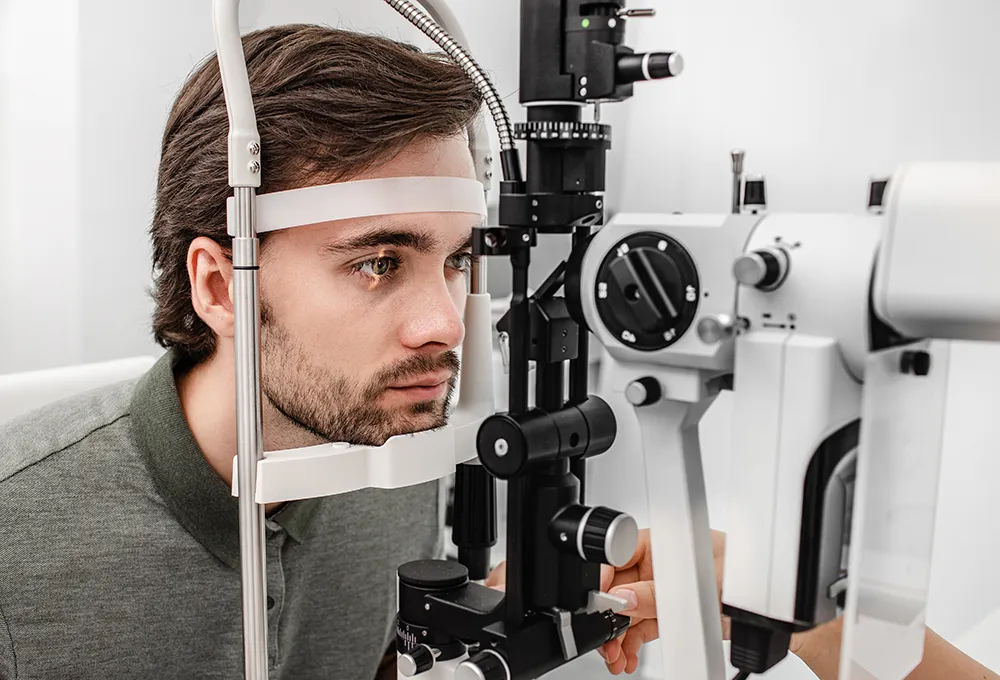
When was your last eye exam? If you’re trying to remember while squinting at your phone, computer, or the menu at dinner, it may have been too long.
Regular check-ups do more than update your prescription—they protect your long-term vision and eye health. Scheduling a comprehensive eye exam in Fulton ensures you’ll have clear, comfortable vision and peace of mind knowing your eyes are healthy.
In this blog, we’ll cover how often you should see an eye doctor based on your age, health, and lifestyle. We’ll also discuss why eye exams matter more than you might think.
General guidelines for eye exams
So, how often should you see an eye doctor? The American Optometric Association (AOA) provides general recommendations, but our experienced eye doctor can adjust them based on your age, lifestyle, health history, and vision needs.
For children:
- 6 months to 1 year old: A pediatric eye exam can help detect developmental issues early.
- Around three years old: Another exam ensures your child’s vision is developing properly.
- Before school: A comprehensive eye exam helps confirm your child is ready to learn.
- School years: Annual exams track growth, catch vision changes, and support success in school.
For adults (18-39):
- No vision issues: If your eyes feel healthy, you don’t wear glasses or contact lenses, and you don’t have any known risk factors, scheduling a comprehensive eye exam every two years is usually enough.
- Wearing glasses/contacts or at-risk: Do you need to wear eyeglasses or contact lenses? Do you have a higher risk of developing eye conditions? Seeing your eye doctor once a year is the best way to stay ahead of changes and protect your vision.
For adults (40-64):
This stage comes with an increased risk of vision changes like presbyopia (age-related farsightedness) and conditions like glaucoma.
- Low risk: If you’re not noticing any vision changes and don’t have risk factors for eye disease, a visit to the eye doctor every two years is generally sufficient.
- Vision correction or risk factors: If you wear corrective lenses or have health or family history concerns, yearly eye exams are the safest way to catch issues early.
For seniors (65+):
As we get older, keeping a close eye on vision becomes increasingly important. Conditions such as cataracts, macular degeneration, and glaucoma are more likely to develop with age.
- Annual exams: Most people in this age group benefit from an eye exam every year to monitor for age-related changes.
Special circumstances: when eye exams should be more frequent
Sometimes it’s important to schedule eye exams more often than the general guidelines suggest:
- Health conditions: Diabetes, high blood pressure, or other systemic issues can affect your eyes and cause complications.
- Family history: If eye diseases like glaucoma or macular degeneration run in your family, scheduling regular exams helps catch early changes and protect your vision before problems develop.
- Vision changes: Blurred vision, headaches, or eye strain are all signs to schedule an exam.
- Work-related strain: Long hours on digital devices or in challenging environments can require more frequent visits.
Eye exams are about more than vision
Even if your vision seems clear, eye exams do much more than update your prescription. Many serious eye conditions, such as glaucoma, can develop gradually without noticeable symptoms at first. By the time changes appear, treatment may be more complicated.
Regular eye exams allow your eye doctor to detect these issues early, making management easier and helping protect your vision for years to come.
Protect your eyesight with regular exams
If it’s been a while since your last visit, now’s the perfect time to schedule one. At VisionArts Eyecare Center, we provide personalized, exceptional care for the whole family, including infants and children. Call us or fill out our online appointment request form today.